Hi

Viewing archives for Dr. George Ward

AI and Workplace Wellbeing

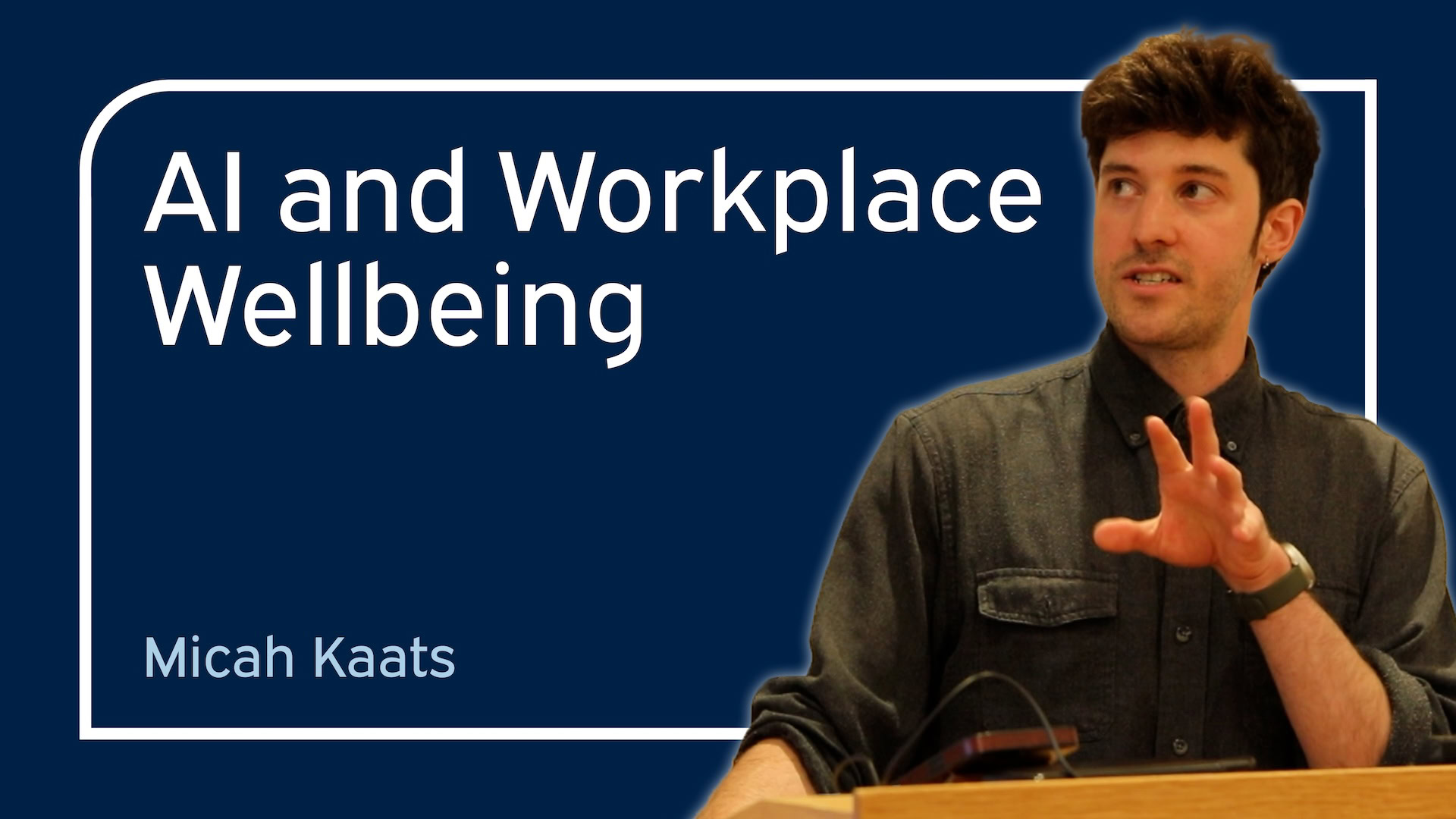
Micah Kaats (Harvard) and Dr George Ward (INSEAD) shared findings on the impact of AI on workplace wellbeing at the latest of the Wellbeing Research Centre’s Seminar Series.

The pair shared findings from three studies, examining the AI impact of workers’ exposure to AI, the wellbeing effects of its use in the workplace, and individual-level effects.

Watch the full presentation on the Centre’s YouTube channel.

Generative AI and workplace wellbeing

Author Talks: Are your employees happy at work?

McKinsey & Company

In this edition of Author Talks, McKinsey’s Vanessa Burke chats with Jan-Emmanuel De Neve, director of the Wellbeing Research Centre at the University of Oxford, about Why Workplace Wellbeing Matters: The Science Behind Employee Happiness and Organizational Performance (Harvard Business Review Press, Spring 2025), coauthored with INSEAD assistant professor George Ward. De Neve shares data analysis on the feelings and motivations of millions of job seekers and identifies key drivers that influence their workplace well-being. He explains why workplace well-being varies across companies and provides evidence-based ideas for business leaders who seek to improve productivity, recruitment, and retention.

Why Workplace Wellbeing Matters

Jan-Emmanuel De Neve and George Ward

Most of us spend a third of our waking lives at work. Work shapes our schedules, relationships, identities, and economies – but is it actually making us happy?

This crucial question is explored in depth by leading Oxford researchers George Ward and Jan-Emmanuel De Neve, who provide the richest, most comprehensive picture of workplace wellbeing yet.

In Why Workplace Wellbeing Matters, the authors clarify what workplace wellbeing is (and is not) and offer a framework for how businesses can approach and improve it. Drawing on extensive, large-scale data – including the world’s largest dataset on employee wellbeing, gathered in partnership with the jobs platform Indeed – the book reveals the remarkable ways in which wellbeing at work varies across workers, occupations, companies, and industries.

The authors present new, evidence-based insights into the origins of workplace wellbeing and how businesses can enhance the employee experience. Drawing on work from multiple academic disciplines, they show that workplace wellbeing encompasses both how we think about our work as a whole and how we feel while doing it. Their research demonstrates that improving wellbeing can boost productivity, aid in talent retention and recruitment, and ultimately improve financial performance.

With in-depth analysis and keen insight, Ward and De Neve debunk myths and test assumptions amidst an often-confusing cacophony of voices on wellbeing at work. Why Workplace Wellbeing Matters provides a firm foundation and indispensable resource for leaders seeking to shape the future of work.

Why Workplace Wellbeing Matters published by HBR Press

Business books: what to read this month

Financial Times

The growth and extent of workplace interventions claiming to improve employee health — from mindfulness to yoga — is enough to cause any manager a headache. But while the costs and the uptake of programmes have surged, the evidence for their effectiveness has not.

The authors, two Oxford-based academics, guide readers through confusion over definitions, data, causes and outcomes in a field that remains poorly researched, and overcrowded with assertions that are far from rigorous.

They have done some of the best analysis in the field seeking to understand the drivers of wellbeing, and its links to productivity. Pay and flexibility in employee location are important, according to this book. But the writers also suggest a sense of belonging, the ability to achieve goals, and genuine trust between colleagues, are even more effective in keeping us happy at work.

Work Culture in an Era of Mass Layoffs

Psychology Today

According to Jan-Emmanuel de Neve and George Ward, authors of a new book called Why Workplace Wellbeing Matters: The Science Behind Employee Happiness and Organizational Performance, workplace wellbeing is not just about free lunchtime yoga classes and ping pong tables in the breakroom. And while flextime and remote work have a positive impact on employees’ ability to juggle professional and personal responsibilities, it is the way we view our work that has the most influence on our wellbeing.

Healthcare salaries fail to keep up with workers’ commitment

Financial Times

More broadly, De Neve points out that structural aspects of the workplace tend to be more important drivers of wellbeing than interventions offered to individual staff. As he argues in his latest book (co-authored with colleague George Ward) Why Workplace Wellbeing Matters, overall “the majority of people are not happy at work”.

“The main drivers of low or high wellbeing are the structural environment more than the individuals themselves,” De Neve adds. Based on detailed research primarily focused on employers in the US, he says the main drivers of satisfaction are job security; relationships and a feeling of belonging; and independence and flexibility. Less important overall are earnings and safety in the workplace.

3 Policies to Guide a Pro-Growth, Pro-Worker Economy Under Trump

Harvard Business Review

There is a powerful business case to be made for increasing the economic status of the lowest paid workers. Lower levels of inequality are correlated with higher overall economic growth that benefits every member of society, including shareholders. Companies with the best employee practices create sustained long-term value for their shareholders, as shown by new research conducted by the global hiring platform Indeed and the University of Oxford Wellbeing Research Centre. This point is further demonstrated by funds that track companies with pro-worker policies, such as the Just 100 Index and the ETF Harbor Human Capital Factor (HAPI) that have consistently outperformed the Russell 1000 and S&P 500, respectively.

Global mental health crisis hits workplaces

Financial Times

A recent study by Oxford university researchers, using data from the recruitment website Indeed, illustrated the business case for investing in improving workplace mental health.

Analysing responses from 1mn workers at 1,782 publicly listed US companies, it found a “strong positive relationship between employee wellbeing and the firm’s performance”, said Jan-Emmanuel De Neve, Oxford economics professor and the project’s leader.

A simulated share portfolio of the 100 companies that scored highest in Indeed’s wellbeing surveys consistently outperformed the main stock market indices.

“We have found that how people feel at work is consistently a good leading indicator of future market and financial performance,” said De Neve. Since January 2021, the portfolio had performed 11 per cent better than the S&P 500, he added.